
Landmark study finds global health investment generates economic returns, drives innovation, strengthens health security and expands California’s international influence. Download report here.
Every $1 in federal global health funding spent in California generates an estimated $1.40 to $2.15 in economic activity, according to a new report making a powerful case for global health investment amid sweeping federal funding cuts. California’s Global Health Dividend: The Case for State Leadership finds that $21.5 billion in federal funding generated as much as $46.3 billion in economic output between 2016 and 2025.
With research led by the USC Institute on Inequalities in Global Health, the multi-institutional study also documents how global health partnerships drive biomedical innovation, strengthen health security, and expand California’s international influence.
The findings were launched November 18 at UCSF, with participation from the Alliance and its members Friends of the Global Fight, Global Strategies, Stanford, UC Global Health Institute, and UCSF.
Key findings: California’s global health dividend
The report examines four interconnected ways that global health engagement benefits California:
- Economic growth and jobs. Federal global health-related spending generated an estimated $30.2 billion to $46.3 billion in economic output and supported approximately 157,000 to 239,000 job-years over the decade studied, depending on the economic effects included.
- Biomedical and technological innovation. Global health partnerships help California companies develop, finance and scale innovations, while international purchasing commitments create predictable demand for medicines, diagnostics and other health technologies. The report highlights examples including Gilead’s HIV prevention innovations and Cepheid’s tuberculosis diagnostics.
- Stronger health security. California benefits from international disease surveillance networks, scientific collaborations and public health expertise that help identify and respond to emerging infectious disease threats. Cuts to global health funding put these capabilities—and the relationships supporting them—at risk.
- Global influence and leadership. California’s research institutions, companies and health organizations extend the state’s international influence through scientific excellence, trusted partnerships and engagement with health systems around the world.
Together, these findings show how global health investments generate benefits that extend well beyond the countries and communities where programs operate.
California’s global health leadership in action
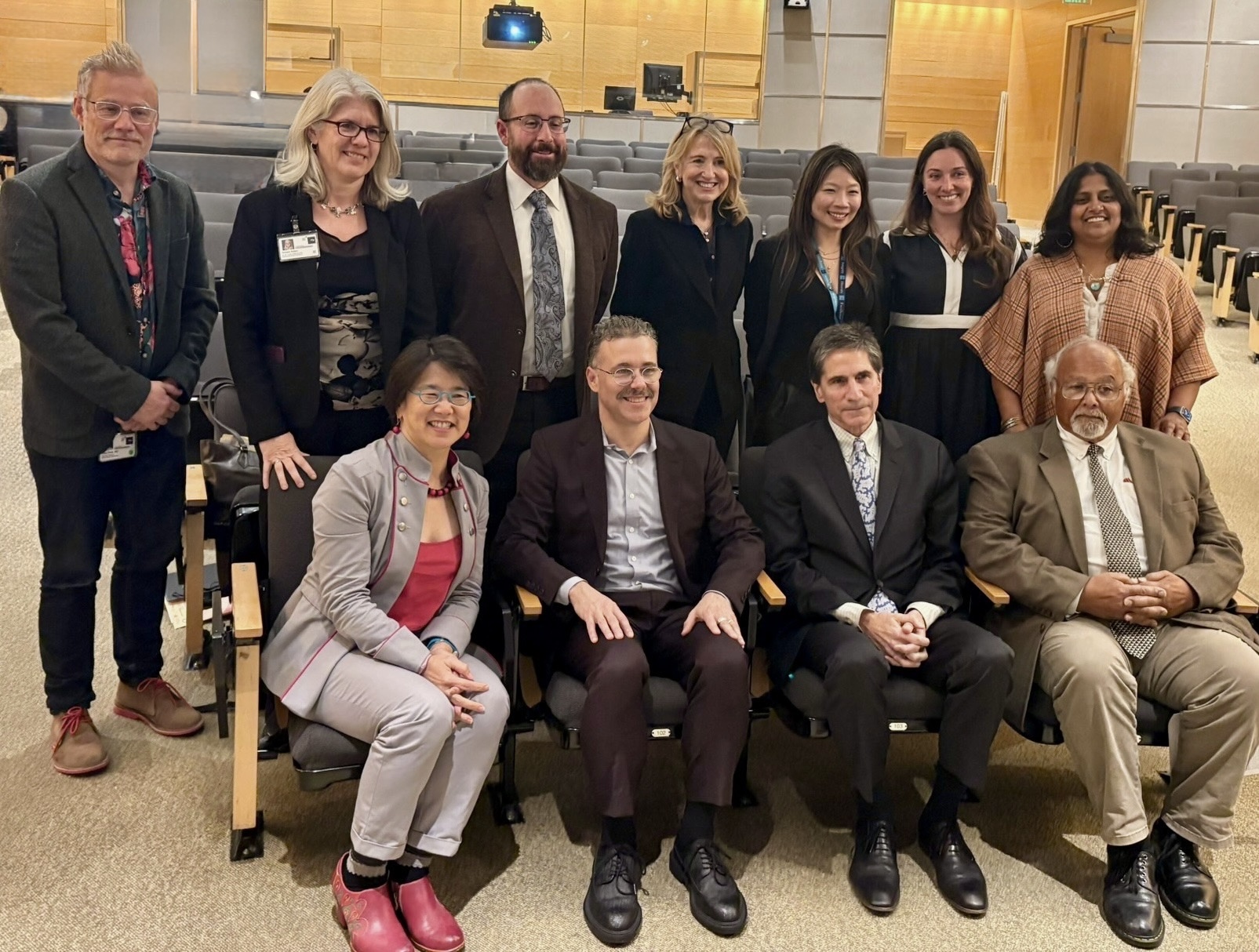
Speakers at the launch at UCSF on November 18
The November 18 launch at UCSF brought the findings to life through conversations with researchers, public health leaders and practitioners.
Jonathan Cohen of USC, the lead research institution, and Chris Collins of Friends of the Global Fight opened with the case for California’s global health leadership. Four conversations then explored the report’s central themes:
- Global influence: UCSF’s Dr. Eric Goosby and Dr. Mike Reid, an Alliance board member, discussed how California’s global health engagement extends the state’s influence and strengthens international relationships.
- Economic impact: UCSF’s Amiee Alden and Dr. Tracy Lin explored the economic value generated by global health research, investment and partnerships.
- Innovation: Alliance’s Sara Anderson and Dr. Joshua Bress of Global Strategies discussed how technologies, partnerships and lessons developed through global health work can also benefit California communities.
- Surveillance and security: Dr. Erica Pan, California State Public Health Officer and Director of the California Department of Public Health, and UCSF’s Andrea DeLuca examined how international public health collaboration strengthens disease surveillance and preparedness at home and abroad.
The program concluded with Chris Collins of Friends of the Global Fight and Dr. Madhavi Dandu of the UC Global Health Institute, looking ahead at opportunities for California to strengthen its leadership and translate global engagement into greater impact.
Innovation flows both ways: Lessons for California
One theme resonated especially strongly at the UCSF launch: global health innovation is not a one-way exchange.
Sara Anderson of the Alliance joined Dr. Joshua Bress, of Global Strategies, for a conversation about how solutions developed through partnerships with African clinicians and health systems may also help address healthcare challenges in rural California. Their discussion highlighted NoviGuide, a digital clinical decision-support tool developed by Global Strategies with partners in Africa to help frontline health workers deliver care in settings with limited access to specialists.
The challenges are familiar in parts of California, where rural communities may face long distances to specialized care.
Working with health systems in Africa has also provided opportunities to refine technologies in demanding real-world environments, generating lessons about usability, clinical workflows and resilience that could benefit communities elsewhere.
“Many of the health challenges communities face around the world differ more in degree than in kind,” says Bress. “Innovations developed to address these shared challenges can have applications globally, and the Alliance is well-positioned to help connect innovations proven abroad with communities here in California.”
The conversation also reinforced a lesson from the Alliance’s convenings at the intersection of AI, technology and global health: successful innovation requires more than a promising product. It depends on understanding local needs, building trust, integrating tools into health systems and connecting the right partners.
“Some of the most promising innovations emerge when people across countries and communities work together from the beginning to solve shared challenges. The relationships, the trust, and mutual learning that develop are what make innovation possible; the new technology itself is only one piece. At a time when investments in science and international collaboration are under pressure, sustaining these relationships and partnerships matter more than ever—for California and communities around the world,” said Anderson.
Building on California’s global health strengths
The California Global Health Leadership Initiative brings together eight organizations to examine the state’s global health contributions and the opportunities for greater leadership.
With research led by USC and collaboration from Friends of the Global Fight, UCSF, Stanford, UC Global Health Institute, UCLA, Charles R. Drew University of Medicine and Science, and the Alliance, the initiative demonstrates the breadth of California’s global health community.
For the Alliance, the findings reinforce the importance of connecting expertise across sectors and geographies. As a trusted, neutral network headquartered in Silicon Valley linking technology companies, industry, researchers, funders and global health organizations, the Alliance helps build the relationships through which ideas, knowledge and innovations can move in multiple directions.
At a time of significant change in global health financing and institutions, the report offers an evidence-based case for sustaining these connections—and for California to help shape the next chapter of global health leadership.